

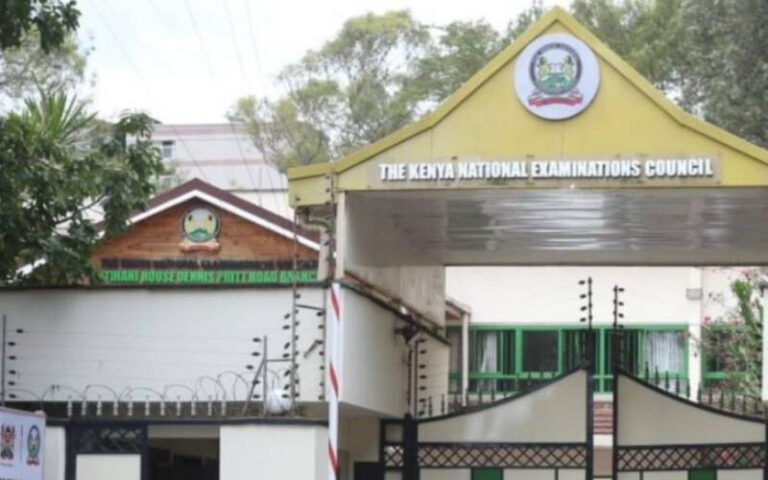
The Kenya National Examinations Council (Knec) is on the spot after fresh claims emerged that it is cash strapped and cannot pay the 2025 exam invigilators.
This is despite recent assurance by Education Cabinet Secretary, Julius Ogamba, who had promised teachers of payment in one week time.
CS Ogamba had dismissed claims that Knec is broke and unable to pay the contracted professionals.
Ogamba was reacting to a claim that Knec was not allocated funds in the recent supplementary budget.
SUPPLEMENTARY BUDGET
“Supplementary budget has been passed. We now have the resources. We apologize for the delays. Knec has paid their casual staff and drivers but the main officials have not been paid. We are looking for the exchequer next week,” said CS Ogamba on 11th April during a Kisii University event which was captured in Gusii radio and TV stations.
The CS had said the examiner have received sh 1.5 billion from the National Treasury to pay teachers.
However fresh sources say the CS was speaking from an uninformed position and that Knec currently lacks the funds to meet payment to the invigilators.
President William Ruto had on Wednesday 8th April assented to the Supplementary Appropriations Bill, 2026, at State House Nairobi making it a law which increased total government expenditure by sh 393 billion from sh 4.3 trillion to sh 4.69 trillion.
“It aligns the national budget to address urgent and emerging priorities, including critical security operations, disaster response, and strategic infrastructure investments,” Ruto had said.
The education sector received sh 45.28 billion instead of sh 66 billion which had earlier been proposed.
Basic Education Principal Secretary, Julius Bitok, had called for speedy approval of the sh 66 billion supplementary budget after pressure piled for Knec to pay invigilators.
Bitok had urged MPs to approve the funding which he had said will be used to pay Knec invigilators, school capitation and ASAL school feeding programme.
Surprisingly this budget was downsized heavily thus affecting key budgetary allocations.
Breakdown of Education Sector funding in the Supplementary Budget
- sh 24.2 billion allcoated to TSC to cover salary shortfalls and teachers SHA contributions
- sh 4.1 billion for HELB
- sh 3.88 billion to clear 2017 – 2021 university salary arrears and to support TVET Wings to Fly programme
- sh 6 billion for higher education for Moi and Kabarnet university
- sh 1.5 for university funding board
- sh 3 billion for TSC pending bills for tecahers medical cover
- sh 2.6 billion for Kenya – China TVET project phase III
Knec itself refuted a viral post dated 8th April, which had claimed the Council has received funding from the National Treasury for paying invigilators and examiners their dues.
Auditor General, Nancy Gathungu, had declared the Council broke after prolonged payment delays.
Gathungu had declared Knec to be technically insolvent with liabilities exceeding assets by 2 billion shillings and unable to meet its financial obligations unless the government bails it out.
Some union officials have threatened to storm the Knec Mitihani House to demand immediate payment of exam invigilation dues.
Both Knut and Kuppet, have also threatened to boycott the 2026 national exams and assessments unless a lasting solution on payment of invigilators is found.
Each year Knec contracts professionals who assist in the national exercise. They include teachers, drivers and security personnel.
Though Knec does not pay for services rendered by teachers in exam centres, it reimburses transport fares after national exams are concluded, marked and results released to the public.
Some teachers have previously complained to the Council after missing payment when payment of dues was done.
Knec previously noted the delays are mostly due to data mismatches and documentation.
“Delays have in some cases been linked to data mismatches, documentation requirements (such as properly signed and stamped attendance registers), and verification processes necessary for accurate payment disbursement. We urge those affected to confirm that their details in the Contracted Professionals (CP2) system match their official identification and mobile money registration information to facilitate processing,” said Knec.