


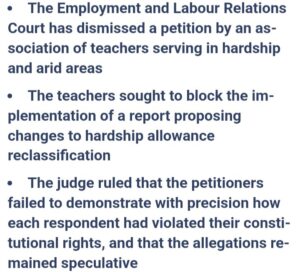
TSC Hardship Allowance Petition. Teachers serving in hardship areas have suffered a major setback after the court dismissed a petition seeking to stop the Teachers Service Commission from proceeding with its planned review of hardship allowance policies.
The petition, which was filed by a section of teachers’ representatives, aimed to block the TSC from reviewing the current hardship allowance structure. The teachers argued that the proposed changes could negatively affect educators working in remote and challenging regions across the country, where living and working conditions are significantly difficult due to insecurity, poor infrastructure, and limited access to essential services.
However, in its ruling, the court declined to grant orders stopping the TSC’s review process. The judge noted that the application did not meet the legal requirements necessary to halt an ongoing administrative review by the commission. This decision now clears the way for the TSC to continue evaluating the hardship allowance framework without interruption.
The ruling has sparked concern among teachers stationed in hardship areas, many of whom fear that the review could lead to reduced benefits or stricter qualification criteria for receiving the allowance. For many educators working in ASAL and other remote regions, the hardship allowance serves as a critical financial incentive that helps cushion them against the difficult conditions they face daily.
On the other hand, education stakeholders have urged calm, emphasizing the need for transparency and consultation throughout the review process. They are calling on the TSC to engage teachers’ unions and affected parties before implementing any final changes to ensure fairness and avoid disruption in learning institutions.
TSC Hardship Allowance Petition
Hardship allowance has remained a long-standing issue in Kenya’s education sector, with repeated calls from teachers in remote areas for improved compensation and better working conditions. The latest court decision now shifts attention to how the TSC will proceed and whether the concerns raised by teachers will be adequately addressed.
As the review process continues, teachers’ unions and stakeholders are expected to closely monitor developments, with possible further legal or negotiation steps depending on the outcome of the commission’s final decision.