

Recently, a collective bargaining agreement was signed by the Teachers Service Commission (TSC) and the three key teachers’ unions (KNUT, KUPPET and KUSNET) this past month, known as the 2025–2029 collective bargaining agreement (CBA), which introduced the new pay structure for teachers in Kenya. The CBA’s goal is to provide improved teacher welfare and structured increments in teacher pay over the next several years.
Implementation of pay increment
The implementation of the pay increase for teachers will begin in phases starting with 1 July 2025, and the second phase of the salary increases will occur in July 2026, with new pay structure adjustments continuing until 1 July 2029. As a result, all teachers will stay in their respective grading systems and progress through their careers using the same T-Scale system from T-Scale 5 to T-Scale 15 according to the Teachers Service Commission (TSC).
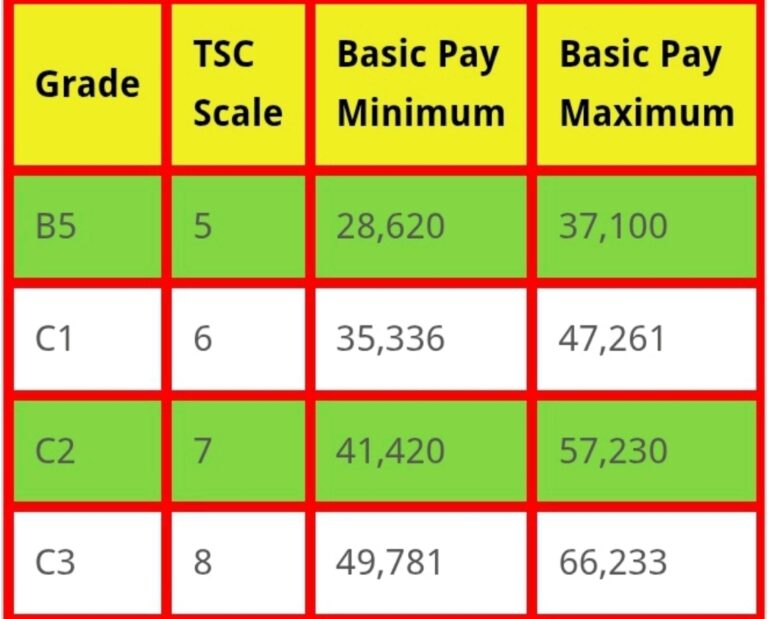
Another positive outcome of the CBA is an increase of close to 30 per cent at the end of the CBA for the lowest-paid teacher. Teachers at the Primary Teacher II level will experience an increase of close to 30 per cent at the end of the CBA, increasing their minimum basic salary from around KSh23,800 to nearly KSh29,000, which will help to ease the burden of the increased cost of living. Higher-paid teachers will also benefit from the CBA; however, the percentage increase will be lower. The maximum salary for chief principals in the D5 grading system will be around KSh167,415 per month.
Although this is only a small increase, it will enhance the pay for principal administrators of large institutions. Basic salaries are the same, maybe because of cost-of-living considerations, also with respect to other allowances, including but not limited to commuter, hardship, annual leave, and disability guides.
House Allowance Rates Review
A review of house allowance rates by TSC would benefit certain clusters of teachers, especially those on transfer outside of large metropolitan areas. Also introduced was a new baggage allowance, which would benefit teachers being relocated over long distances.
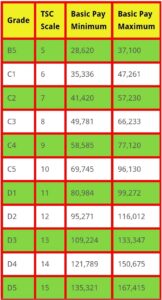
The Commission has stated that teachers who are currently in service on 01/07/2020 will all be placed on the new salary structure and that they will keep their current incremental dates and continue to receive annual salary increments based on the Code of Regulations for Teachers.
In conclusion, the 2025-2029 Collective Bargaining Agreement will provide a significant contribution of billions of shillings to the education sector to enhance teachers’ salaries during the next five years. Unions have advocated for higher allowances; however, the increase in teachers’ salaries due to the implementation of the new salary scale will result in higher morale and greater stability in the teaching profession nationwide.