

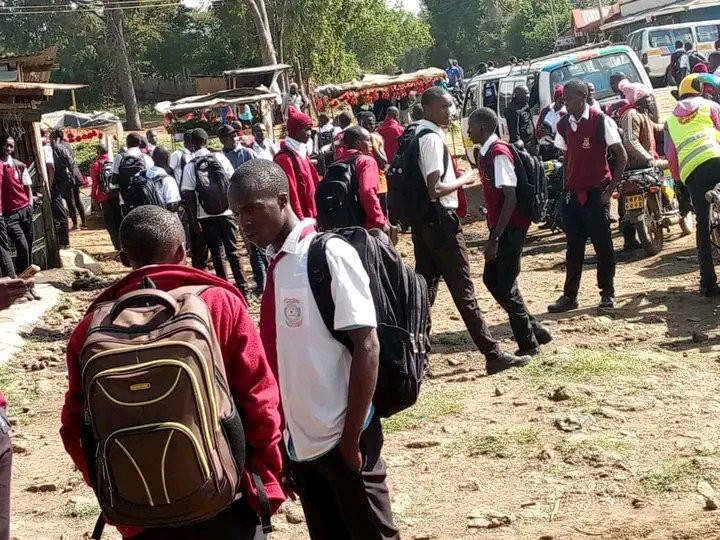
The Kenyan education landscape is currently experiencing a period of significant recalibration.
As the 2026 academic calendar progresses, a clear divergence has emerged between official Ministry of Education directives and the practical realities on the ground regarding the upcoming mid-term break.
With the Ministry initially scheduling the break for June 24th to 28th, a flurry of activity—driven by internal school management needs, previous unrest, and an ambitious co-curricular schedule—has led many institutions to advance their closure dates.
The Changing Face of the Mid-Term Break
While the official gazetted dates for the mid-term break are set for June 24th to 28th, the actual practice across the country tells a different story.
A significant number of secondary schools have opted to commence their break as early as Thursday, June 18th, or Friday, June 19th.
This deviation is not merely a matter of convenience. Several secondary institutions have experienced a wave of student unrest in recent weeks, leading administrators to expedite the closure to ensure campus stability.
For many of these institutions, the break serves as a necessary “cooling-off” period.
In contrast, primary schools are largely maintaining a more synchronized schedule, with most set to break for the mid-term recess on the afternoon of Tuesday, June 23rd.
A Call for Emotional Stewardship
Amidst the logistical adjustments, Education Cabinet Secretary Ogamba has issued a poignant message to parents and guardians.
Acknowledging the pressures that students face within the rigorous academic environment, the CS urged caregivers to leverage the mid-term break as a period of active engagement.
“Use the mid-term break to provide the emotional guidance that your children may be lacking,” CS Ogamba remarked.
This emphasis on emotional intelligence and parental involvement comes at a time when the ministry is acutely aware of the tensions that can arise from extended, uninterrupted periods of schooling.
Looking toward the future, the Ministry has announced plans to rationalize the school calendar starting next year.
The objective is to achieve a more balanced distribution of the three academic terms, effectively mitigating the stress and exhaustion that often accompany long, unbroken stretches of study
The Heat of Competition: A Packed Co-Curricular Season
The rush to the mid-term break is occurring against the backdrop of one of the most competitive co-curricular seasons in recent memory.
The academic term is currently buzzing with talent discovery, with sports and arts programs pushing students to their physical and creative limits.
For secondary schools, the internal competitive cycle is well underway. Having successfully navigated the sub-county levels, many teams are now bracing for the county-level challenges that await them immediately upon their return from the mid-term break.
Meanwhile, primary schools have concluded their sub-cluster engagements and are in the final stages of the cluster-level competitions before they release learners for the break on June 23rd.
Integrity and Age Eligibility: A Zero-Tolerance Stance
As the stakes for these competitions rise, the Ministry of Education has implemented stringent measures to preserve the integrity of school sports.
The prevalence of age cheating has been a perennial concern, and the Ministry is now moving to eliminate it through strict enforcement.
The following age caps have been codified and are now in strict effect for all sanctioned school competitions:
Primary Schools: Strictly restricted to learners aged under 12 years.
Junior Secondary Schools (JSS): Strictly restricted to students aged under 15 years.
Secondary Schools: Strictly restricted to students under 18 years, with an absolute ban on adult participants.
Birth certificates are now the mandatory and singular document accepted for age verification.
The Ministry has issued a grave warning: any teacher or administrator found attempting to forge, alter, or tamper with these documents will face immediate disqualification and will be referred to the Teachers Service Commission (TSC) for severe disciplinary action, up to and including termination.
Empowering Educators: The TSC’s Strategic Recognition
Perhaps the most transformative development this year is the Teachers Service Commission’s (TSC) decision to formally link co-curricular excellence to career progression.
This move is designed to shift the perception of sports, drama, and music from “extracurricular” to core professional competencies.
In a landmark circular dated February 9, 2026, TSC Director of Staffing, Antonina Lentoijoni, directed all County Directors to establish and maintain a comprehensive database of educators who excel in mainstream co-curricular activities.
This database is not merely for record-keeping; it is a vital metric that will inform teacher management interventions and future promotion opportunities.
The TSC is now aggressively tracking and rewarding involvement in:
Sports: Recognizing the expertise of coaches, referees, umpires, and technical officials.
Drama and Film: Acknowledging the contributions of directors, producers, and adjudicators.
Music: Tracking the roles of directors and adjudicators involved in the Kenya National Music Festivals.
Science: Crediting advisors, project directors, and judges who facilitate the Kenya Science and Engineering Fair.
Teachers are encouraged to maintain meticulous records of their participation, whether at the Sub-County, County, Regional, or National levels.
For those navigating the documentation process, Dr. Samuel Marigat, the Regional Director (Nairobi), serves as the primary liaison between the TSC and the Ministry of Education.
The Road to Nationals: 2026 Calendar Overview
As schools prepare for the mid-term hiatus, the path forward is clearly mapped. Education Ministry released the official schedule for the 2026 national championships, ensuring that every institution has a clear target for their co-curricular pursuits.
Event Location Dates
Term 2 National Games Thika, Kiambu July 28th – Aug 1st (Clinic: July 25-26)
Kenya Music Festivals Bungoma Aug 2nd – 10th (Gala: Aug 11-12)
FEASSA Games Tanzania August 14th – 22nd
East Africa Music, Dance & Drama Soroti, Uganda August 18th – 23rd
Regional Directors of Education have been instructed to distribute this calendar extensively, ensuring that no school is left in the dark as the competitive cycle accelerates toward the national stage.
1 Comment
Interesting to see the half-term dates announced. Does this mean more planning for summer activities?